The Short Version
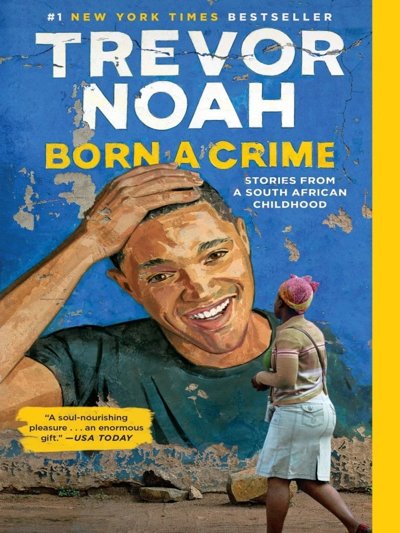
Trevor Noah’s Born a Crime, published in 2016, is a memoir of growing up in South Africa as the son of a black Xhosa mother and a white Swiss German father, at a time when their relationship was against the law. It is a strong club pick because it is funny, moving and a sharp introduction to apartheid, and our review calls it a book everyone will actually finish.
Below are fourteen discussion questions plus a section on applying the book, and a short history check so the group can test the facts. The last two questions concern the final chapter, so hold them until everyone has finished. The book scores four and a half out of five in our review.
Before You Start: Content Notes For Your Group
Tell your group first. The book includes strong language, family violence and, in the last part, a shooting that is described directly. It is handled with care, but it is hard to read.
Discussion Questions
- The title is literal: the Immorality Act banned sex across racial lines, and Trevor was born in February 1984, before those laws were repealed in 1985. What does it do to a child to be, as he puts it, the evidence?
- In the first chapter, nine-year-old Trevor and his mother and baby brother flee a minibus taxi, and his mother throws him out of the moving vehicle. Why does Noah tell such a frightening scene as a comic one?
- Patricia Noah is fearless, deeply religious, stubborn and funny, and she took Trevor to three churches every Sunday. What did you admire about her, and what troubled you about how she disciplined him?
- Between the chapters are short essays on the pass laws, the homelands and why South Africa has eleven official languages. Did the essays help or interrupt the stories?
- Under the Population Registration Act every South African was classified by race. In a black township Trevor looked white, in the colored area he was not colored enough, and in the white suburb he was the only black kid. Where have you felt like you did not fit a box?
- Trevor learned to switch between English, Xhosa, Zulu, Afrikaans and more, and his chameleon chapter argues that language helps him survive. Is language more powerful than skin color in deciding who belongs?
- Noah argues that the genius of apartheid was dividing the majority against each other by language and tribe. How did the book make that divide-and-rule idea concrete?
- Fufi, the deaf dog, and the chapter on the friend named Hitler are both funny on the surface. What is sharp underneath, especially about how little many South Africans were taught of world history?
- Trevor sold pirated CDs and DJed at parties in the township of Alexandra. What did that chapter teach about how a teenager makes his own opportunity?
- Our review says the structure is thematic, not chronological, and some readers find it disorienting. Did the jumps help each chapter work as a complete story?
- The book stops in his early twenties and never explains how he became a comedian or got The Daily Show. Were you disappointed, or did the choice make the book stronger?
- Noah reads the audiobook himself and does all the languages and voices. If you listened, did hearing him change the book?
- (Final chapter) Patricia marries Abel, whose Tsonga name means Be afraid, and years later he shoots her. The police treated her calls as a private family matter. What does the book say about how the justice system treats women?
- (Final chapter) In the hospital, with her face shot, Patricia jokes that Trevor is now officially the best-looking person in the family. Why did Noah end on the joke and the bill, and did it work for you?
Applying It Together
Ask each member to name one thing they learned about apartheid that they did not know, and one way they use humor to get through something hard, as Trevor and Patricia do. Ask whose story in your own family deserves to be written down, and whether you would tell it with jokes. If you want to go further, read one of the history essays aloud and compare it with a short account of apartheid.
Checking The History
Our history check found the book accurate and often sharper than a textbook. Apartheid was built by the National Party government after 1948 and lasted until the first democratic elections on the twenty-seventh of April, 1994, when Trevor was ten. Sharpeville in 1960 left sixty-nine people dead. Noah simplifies one joke: Japanese people were treated as honorary whites, but Chinese South Africans were officially classified as colored. One fact has changed since the book came out. In July 2023 South African Sign Language became the twelfth official language.
What To Read Next
If your group wants to decide first, start with our review. After the discussion, our final chapter explainer covers the shooting and Patricia’s joke, our history check goes through the apartheid facts, and our books-like-it list covers seven memoirs including Educated, The Glass Castle and Long Walk to Freedom.