Two Endings
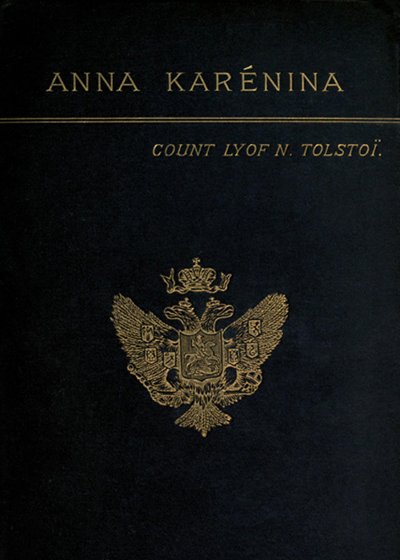
The story ends in book fifteen and the first epilogue, which jumps to eighteen twenty. Then comes a second epilogue that is not a story at all. So I will take them in order. This video spoils everything, including who is alive at the end and which couples are married. I used the Project Gutenberg text, in the Maude translation, and for this video I read the last five chapters of book fifteen and the family chapters of the first epilogue. I only skimmed the history essays, and I did not re-read the long middle.
The Last Months of the Story
Book fifteen runs from the end of eighteen twelve into early eighteen thirteen. Prince Andrew is dead. Petya is dead. Moscow is burned, and the French army has melted away on the road home.
Pierre goes to Moscow at the end of January and calls on Princess Mary. In chapter seventeen of that book, Mary comes into the dining room with Natasha, who is calm, with a severe and grave look. By chapter twenty, something has woken up in Natasha. She waits at the door for Mary to tell her what Pierre said, and she begs forgiveness with her face for being happy. Pierre is going to Petersburg, and Natasha is astounded.
That is where the main story stops. Everything after that is the epilogue.
Seven Years Later
The first epilogue opens with seven years having passed. For the first four chapters, Tolstoy talks about history, and the Emperor Alexander, and why historians blame him. The family story starts in chapter five.
Natasha marries Pierre in eighteen thirteen. The book calls this the last happy event in the family of the old Rostovs. Count Rostov dies that same year. The burning of Moscow, Andrew’s death, Petya’s death, and the countess’s grief had all hit him, one after another. After he dies, the family finds debts of double the value of the property.
Nicholas is with the army in Paris when he hears. He resigns and goes to Moscow, and he takes on the debts rather than refuse the inheritance. Pierre lends him thirty thousand rubles. He takes a post in the civil service and moves into a small house with his mother and Sonya. He is proud, and miserable, and he keeps his distance from Sonya.
Nicholas and Mary
Princess Mary comes to Moscow that winter, and she hears people saying the son has sacrificed himself for his mother. She goes to call on the Rostovs. Nicholas meets her coldly, with a stiff and proud face, and she leaves with a feeling like remorse.
But later that winter, Nicholas visits her, and in chapter six they have the conversation that matters. He says he would give a lot to bring that old time back. She looks him in the eye and tells him his sacrifice is something he will recall with satisfaction. By chapter seven, in the winter of eighteen thirteen, they are married and living at Bald Hills, with his mother and Sonya.
The book then spends a whole chapter on Nicholas as a farmer. In four years he pays off the rest of his debts. By eighteen twenty he is buying land next to Bald Hills. He is a good master, hard alike on the lazy, the depraved and the weak, and the book says the peasants remembered him long after his death. And he has a temper, which Mary dislikes, and in chapter eight she cries when he mentions striking a village elder.
Natasha and Pierre, Eighteen Twenty
The last story scene is the fifth of December, eighteen twenty, the eve of St. Nicholas, at Bald Hills. Natasha has been staying there with her husband and children. She has three daughters, and a baby son named Petya. The book says she has become stouter and calmer, and that the old fire in her face only shows now and then, when Pierre comes home, or a sick child gets well.
Pierre has been in Petersburg for nearly seven weeks, instead of three, and Natasha is anxious and irritable. Denisov, now a retired general, is visiting, and he looks at her in surprise. When Pierre returns, the whole household is glad, and the children most of all.
At supper everyone sits with the family, even the old countess with her patience cards. Nicholas is now the master of the house, and Sonya sits weary but resolute at the samovar. She is still there at the end. In my opinion, it is the saddest detail in the epilogue.
Pierre’s Secret Society
Pierre has come back with an idea. In Petersburg he has been meeting with a society, and he tells Nicholas and Denisov that the country is going to ruin: robbery in the courts, flogging in the army. He thinks honest people must join hands.
Nicholas does not like it. He says a secret society is hostile and harmful. Then he loses his temper. He says that if Pierre worked against the government, and a minister named Arakchev ordered him to lead a squadron against his best friend, he would not hesitate. There is an awkward silence. Natasha steps in to defend her husband, and the talk moves on.
Mary’s Diary
After supper, in chapter fifteen, Nicholas finds Mary at her table, writing. It is a diary, in French, and she blushes because she is afraid he will not approve. Her entry for December fourth is about their eldest boy, Andrusha, who would not get dressed. She tried threats, and they failed. Then she left him alone and told him she did not love him, and he ran to her in his shirt and sobbed, because he had grieved her. She is giving the children marks every evening, which she calls tickets.
Nicholas reads on and looks at her radiant eyes. It is a small domestic scene, and I think it is the book’s picture of what peace looks like. No battle, no ball, just a woman raising children by tenderness.
The Last Conversation
In chapter sixteen, Natasha and Pierre are finally alone. They talk the way only a husband and wife can, the book says, with many subjects at once and almost no logic. For Natasha, it is a bad sign if Pierre starts reasoning in a straight line, because that means a quarrel is coming.
Pierre tells her Nicholas treats ideas as a pastime. Then he describes his own plan, and for a moment he feels chosen to give a new direction to all of Russian society. He says ideas that have great results are always simple. And Natasha says she only wanted to tell him about Petya, the baby, who shut his eyes while she was holding him, as if he were hiding.
It is a joke, and it is also the last time we see them: a man with a world-changing idea, and a woman with a baby who thinks he is hiding.
The Dream
The very last scene of the story is not about any of them. It is about young Nicholas Bolkonsky, Andrew’s son, who is fifteen and listening in the corner. That night he dreams that he and Uncle Pierre, in Roman helmets, lead an army through a field of floating threads, and then his father is there, with no shape or form, loving him.
He wakes crying. He decides that he will do something with which even his father would be satisfied. That is the last line of the story. The story ends on a boy who wants to live up to his father.
The Second Epilogue
Then the second epilogue arrives, in twelve chapters, with no characters. It is Tolstoy’s argument. He asks what force moves nations, and says historians who point to kings are wrong. He compares the problem to astronomy, saying that people once felt that the earth stood still, and had to give that feeling up before the laws made sense.
His claim is that we feel free, and we have to accept that we depend on time and cause. The last line says we have to give up a freedom that does not exist.
Is that a happy ending? My reading, and it is an opinion, is that it is an ending without a conclusion. The families survive, but the argument keeps going.
Subscribe, and tell me in the comments whether you read the second epilogue or skipped it.