Twelve Ships, One Survivor
Fair warning, this is an ancient poem, but I am telling all of it, ending included. If you want to meet it fresh, read it first and come back.
Here is the hook. Ulysses leaves Troy with twelve ships. By the time he reaches home, in the twentieth year since he left, he has no ships and no crew, and he is asleep when he lands.
The poem has twenty-four books, and I will take them in three parts. Telemachus, books one to four. The wanderings, told in flashback in books nine to twelve. And the return, books thirteen to twenty-four, with a short stop in between.
One line of film context. Christopher Nolan’s The Odyssey, from Universal, lists a release date of July seventeenth, twenty twenty-six, on its official site, as of October thirtieth, twenty twenty-six. This video is about the poem, not the film.
Which Translation
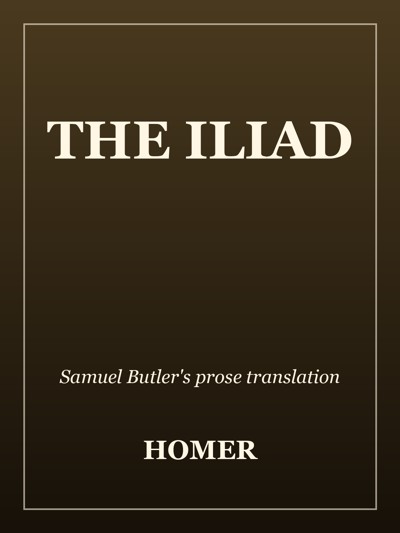
I am using Samuel Butler’s translation, and it is in prose, so it reads like a story, not like verse. Its own preface says it first appeared in nineteen hundred.
That makes it free to read. It is Project Gutenberg ebook number seventeen twenty-seven, and the title page says it is rendered into English prose.
One thing that trips people up. Butler uses the Roman names. So Ulysses is Odysseus, Minerva is Athena, Jove is Zeus, and Neptune is Poseidon. I will use Butler’s names all the way through, and they are on screen.
Telemachus: Books One To Four
Book one starts on Olympus. Neptune is away, so Minerva asks Jove to let Ulysses go home, because the nymph Calypso is holding him. Jove agrees, and Minerva flies to Ithaca disguised as a visitor called Mentes.
At home, the suitors are feasting on Ulysses’s house. Telemachus, his son, is a young man who says it is a wise child that knows his own father. Minerva tells him to call an assembly and sail for news.
In book two the suitors say Penelope tricked them. She wove a great web by day and unpicked it by night for three years, and was caught in the fourth. Telemachus asks for a ship, and he sails with a crew of twenty.
Books three and four are the road trip. Old Nestor tells him at Pylos how the Greeks scattered after Troy. At Sparta, Menelaus and Helen tell him more, and Menelaus passes on what the sea god Proteus told him, that Ulysses is alive on Calypso’s island.
Meanwhile, back home, the suitor Antinous picks twenty men to ambush Telemachus on his way back, at the islet of Asteris.
From Calypso To Phaeacia: Books Five To Eight
Book five finally shows us Ulysses. Mercury delivers Jove’s order, Calypso obeys with a complaint about the gods, and Ulysses builds a raft. It takes him four days, and he sails on the fifth.
Neptune spots him and wrecks the raft. A sea goddess lends him a veil, and after two nights and two days in the water he crawls ashore on Scheria, the island of the Phaeacians.
Book six is the wonderful one. Minerva sends the princess Nausicaa to wash clothes at the river, and a ball game wakes the stranger who has fallen asleep in the bushes. He covers himself with a leafy branch and asks for help.
Later, Ulysses tells the Phaeacians that he stayed with Calypso seven years straight on end. Book seven brings him to King Alcinous and Queen Arete. Book eight is games and songs, and when the bard sings about the wooden horse, Ulysses weeps. Alcinous finally asks who he is, and that question starts the flashback.
The Map: Books Nine To Twelve
Now Ulysses tells his own story, in books nine to twelve. It is the part everybody remembers, and it is a list of stops.
First the Cicones, a town he sacks. Then the Lotus-eaters. Then the Cyclops, where he tells the giant that his name is Noman, and the line that follows is that Noman is killing him.
Book ten brings the god of the winds, who ties a gift of storms in an ox-hide bag, and the man-eating Laestrygonians. Then Circe, who turns twenty-two men into pigs and later keeps Ulysses for a whole twelvemonth.
Book eleven is the trip to the land of the dead. It starts among the Cimmerians, in mist and darkness, and there he speaks with his mother and with the prophet Teiresias. Book twelve gives us the Sirens, the monster Scylla, and the island of the Sun, where the crew make their fatal mistake, and then the long raft trip back to Calypso.
Who Makes It Home
Let me show you what happens to the crew, because this is the part the summaries skip. Ulysses starts with twelve ships.
At the Cicones, the crews lose half a dozen men from every ship. The Cyclops eats six, two at a time. The Laestrygonians sink the other eleven ships, and only his own, tied up outside the harbour, escapes.
Circe turns twenty-two men into pigs, and all of them are turned back. Scylla snatches six more. On the island of the Sun, the hungry crew kill the cattle of the Sun. Jove answers with a thunderbolt, and the men all fall into the sea.
Before Scylla, Circe had warned him that he had better lose six men than his whole crew, and she was right. Butler never gives a grand total of sailors, so I will not invent one. What the text does say is clear. One ship and one man are left.
Ithaca At Last: Books Thirteen To Sixteen
The return starts in book thirteen. The Phaeacians carry Ulysses to Ithaca with rich gifts, and set him down on the sand, still fast asleep. When he wakes, he does not recognise his own country, because Minerva has covered it in mist.
Minerva then turns him into an old beggar and sends him to the swineherd Eumaeus, who has twelve styes with fifty sows in each. Eumaeus is loyal to his absent master, though he has no idea who his guest is. He feeds the beggar, and even says that all strangers and beggars are from Jove.
In book fifteen Telemachus slips home from Sparta, warned by Minerva about the ambush. In book sixteen father and son meet in Eumaeus’s hut. Ulysses says to him, I am your father.
Then Ulysses asks how many suitors there are. Telemachus lists them. Fifty-two from Dulichium, twenty-four from Same, twenty from Zacynthus and twelve from Ithaca. Add them up and it is one hundred and eight.
The Beggar In The Hall: Books Seventeen To Twenty-One
Books seventeen to twenty-one are slow, tense, and very good. Ulysses walks into his own hall as a beggar. His old dog Argos knows him at once, and Argos died as soon as he had recognised his master.
The suitors are cruel to the beggar. Antinous throws a footstool and hits him on the right shoulder, and Ulysses stands firm as a rock. When he fights a real beggar called Irus, he wins with a single blow.
In book nineteen the old nurse Euryclea washes his feet and finds his scar. He grips her throat to keep her quiet. Penelope talks with the beggar about the missing Ulysses, though she does not know him, and tells him that twenty years have passed.
In book twenty he lies awake as the maids go out to the suitors, and he beats his chest and says, heart, be still. Book twenty-one is the contest. Penelope offers to marry whoever strings Ulysses’s bow and shoots through twelve axes. The suitors fail, and the beggar strings it, and his arrow goes through.
The Reckoning: Books Twenty-Two To Twenty-Four
Book twenty-two is the slaughter, and it is graphic. Ulysses shoots Antinous in the throat as he lifts a golden cup, and then says, dogs, did you think that I should not come back from Troy.
Four men stand against them, Ulysses, Telemachus, Eumaeus and a herdsman, and Minerva helps. The suitors are cut down, and only the bard Phemius and the servant Medon are spared. Then Ulysses has the twelve maids who misbehaved hanged, which is hard to read.
Book twenty-three is the quiet one. Penelope tests him with the bed. He says it cannot be moved, because he built it around a living olive tree, and that is how she knows. In the same book he tells her what Teiresias said, that he must still carry an oar inland.
Book twenty-four has the dead suitors in the underworld, and Ulysses finding his father Laertes in the orchard. The suitors’ families rise in revenge, Laertes kills the leader Eupeithes with his spear, and Jove’s thunderbolt falls. Minerva stops the fight, and she makes a covenant of peace.
Worth Reading?
In my view, Butler’s prose is a friendly way in, and you can read it on a phone for free. Books nine to twelve are the adventure, and books seventeen to twenty-three are the best part of the thriller.
The big idea, to me, is patience. Twenty years away, and he still waits for exactly the right moment, in rags, in his own house. My honest warning is that books three, four and some of the late books are slow, and the violence in twenty-two is real. If you only want the monsters, start at book nine.
To recap the shape. Four books about a son. Four books about a castaway. Four books of monsters, told by the man who met them. Twelve books of getting home and winning it back. If this helped, subscribe, and tap like. And tell me in the comments which stop on the map is your favorite.