The Short Version
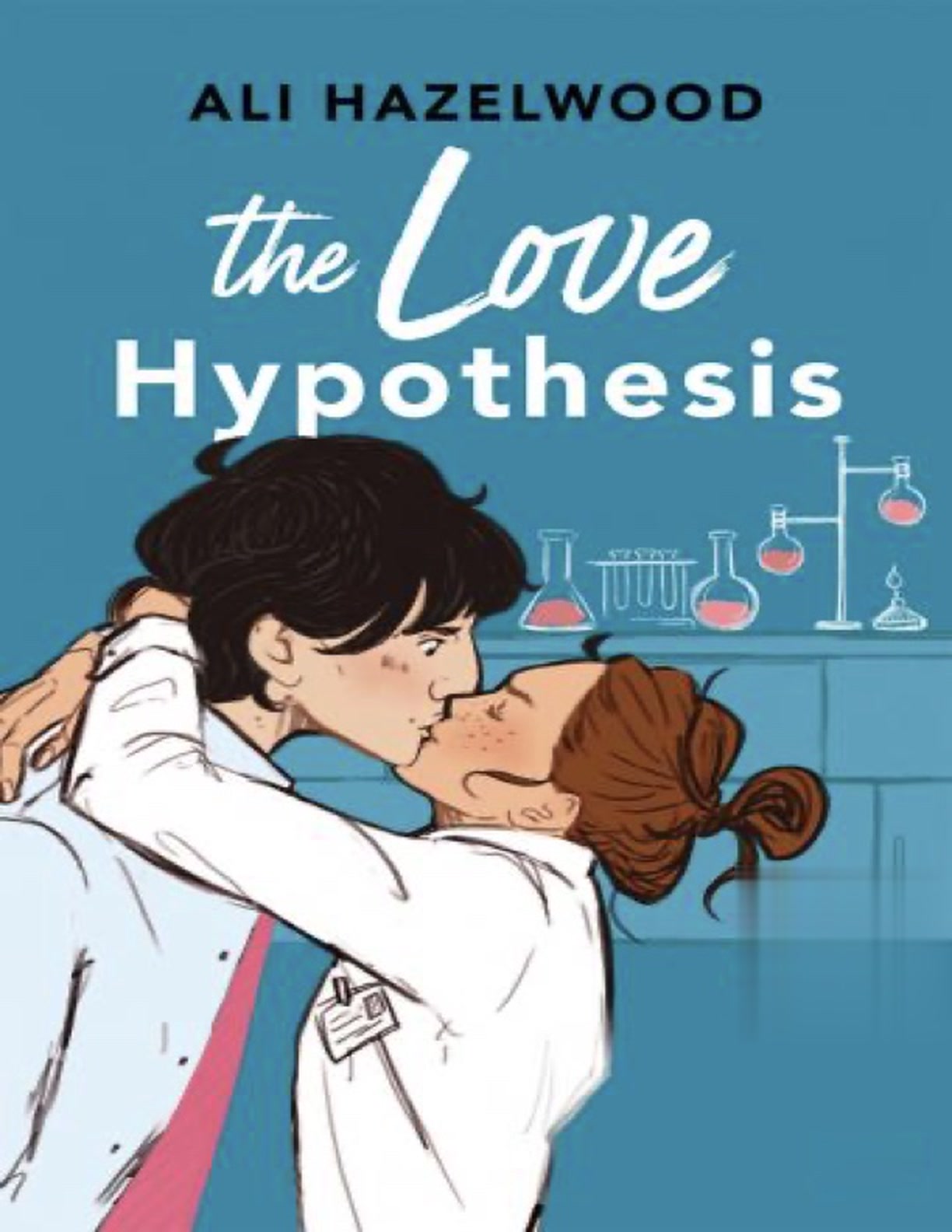
The Love Hypothesis, Ali Hazelwood’s debut romance, suits a book club because it is warm, funny and very nerdy, and it also has something to say about power in academia. Olive Smith, a third-year biology PhD student at Stanford, kisses the nearest man in a hallway to convince her best friend she has moved on. He is Adam Carlsen, a famous and famously terrifying professor, and instead of exposing her he offers a deal: a fake relationship with rules and an end date.
Below are twenty questions: ten you can use before everyone has finished the book, and ten that spoil the ending. A short section on how real the grad school details are gives the group something to check. The book scores four out of five in our review, with top marks for humor and chemistry.
Before You Start: Content Notes For Your Group
Tell your group first. The book has several explicit scenes, so it is not a closed-door romance. It also has a storyline about sexual harassment in academia, which includes some upsetting dialogue, and mild swearing throughout. Olive has also lost her mother to cancer.
Spoiler-Free Questions
- Olive grabs the nearest man and kisses him to win an argument with her best friend, Anh. Why does she panic, and is the lie believable?
- Olive and Adam make rules like scientists: strictly on campus, no one else, coffee once a week in public, and an end date of September 29. Which rule did you expect to break first?
- Every chapter opens with one of Olive’s hypotheses, written like a lab notebook entry. Which one made you laugh, and what do they do for the book?
- Adam is a grumpy, secretly soft hero with a reputation for making students cry. What small details, like the pumpkin drinks and the stuffed squirrels, change your view of him?
- Once the lie spreads, strangers stare, students leave Olive’s lab time alone and professors reply to her emails. What does the book say about how attachment to a powerful person changes how you are treated?
- Olive studies early detection of pancreatic cancer and lost her mother to cancer. How does that give her work weight beyond the jokes?
- Adam needs his colleagues to believe the relationship because his research funding is frozen. Is the deal fair to both of them?
- Anh is loud and loyal, Malcolm steals scenes, and Holden is chaos in a lab coat. Which supporting character did you like most?
- Our review says the plot is not original and the fake dating engine is predictable. Did the familiar beats comfort you or bore you?
- The book began as fan fiction, and our review says you can feel it in the pacing. Did that show up for you?
Spoiler Questions (Finish The Book First)
- Olive ends the fake relationship to protect Adam and lets him think the deal simply expired. Was her sacrifice selfless, a mistake, or both?
- Tom Benton, Adam’s collaborator, cornered Olive at the conference and insulted her work. She was afraid Adam wouldn’t believe her, and even more afraid that he would. Did the book handle her silence fairly?
- Olive forgot to stop recording after her talk, and the audio caught Tom. Was the recording satisfying, or too convenient?
- Holden says Harvard has recruited Adam for years, but he only agreed to an interview after Olive decided to work in Tom’s lab. How does that change your reading of Adam’s plan?
- Olive walks into the restaurant and plays the recording as Tom is trying to send her away. What did you make of Adam’s reaction, including that he says out loud for the first time that he loves her?
- Olive says she was so afraid of a type one error that she made a type two error. Did the statistics work as a love confession?
- Adam first met Olive in a bathroom the year before she started her PhD, and he remembered her spaceship talk with the Star Trek slide. Does that reframe the fake relationship as something he had planned for years?
- She says ik hou van jou in the worst Dutch accent he has ever heard, the only Dutch she knows. Why does the book end her confession there?
- Tom loses his position and researchers at Berkeley and Minnesota want to work with Olive. Is the resolution too tidy?
- The epilogue recreates the exact spot and time of the first kiss, using lab records. Which hypothesis would you add for the last chapter?
How Real Is The Grad School?
Your group may ask how accurate the lab life is. Ali Hazelwood has a doctorate in neuroscience and worked as a professor. Pancreatic cancer is a real hard problem: the five-year relative survival rate is thirteen percent according to the Pancreatic Cancer Action Network, citing American Cancer Society figures, and there is still no screening test for the general population. Type one and type two errors are the two real ways to be wrong in hypothesis testing. Title Nine is a federal law from 1972 banning sex discrimination at institutions that receive federal funding. A fake relationship from a famous professor, and a funding decision swayed by a relationship, are fantasy.
What To Read Next
If your club enjoyed it, our series guide covers Ali Hazelwood’s other books, and her sequel The Two-Body Problem is reported for February 2027. For a spoiler-free start, read our review first, and use the ending explained after the discussion. A Prime Video film starring Lili Reinhart and Tom Bateman is also available to compare.