The Short Version
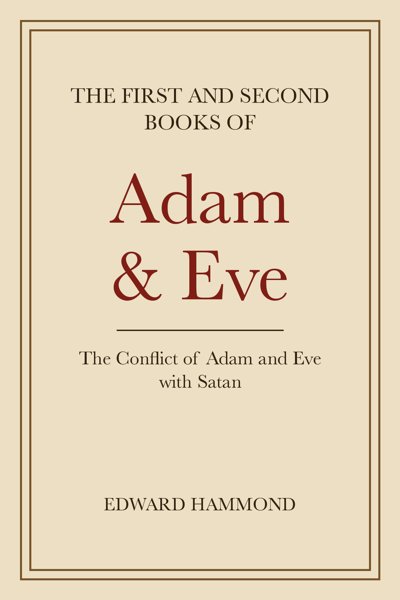
Today we’re fact checking The First and Second Books of Adam and Eve: where this text really comes from, whether it’s a lost book of the Bible, and how it changes the story in Genesis.
The short version: it’s a Christian legend from around the sixth century, not a lost scripture. And it adds a lot that Genesis never says.
Where It Comes From
The text is often called The Conflict of Adam and Eve with Satan. It survives in Ge’ez, the classical language of the Ethiopian church.
Scholars think it was translated from an Arabic original, which itself drew on an earlier Syriac work called The Cave of Treasures. Many of the same legends appear in both.
How It Reached English
In eighteen fifty three, the German scholar August Dillmann published a German translation. In eighteen eighty two, S. C. Malan published an English translation.
That English version was later reprinted in popular collections of lost books of the Bible, which is how most readers find it today. This edition is a modern English rewrite of that older translation.
Is It A Lost Book Of The Bible?
Not really. Lost books makes it sound like it was cut from the Bible. But it was written centuries after the Bible was largely settled.
Scholars call it pseudepigrapha, a writing attributed to or about ancient biblical figures, but written much later. It tells you a lot about early Christian imagination, not about what happened.
What Genesis Says
Genesis is short here. After Eden, Adam and Eve have Cain and Abel. Cain kills Abel, and Seth is born. Then comes a list of generations down to Noah, with ages but very few stories.
This book takes those few lines and turns them into hundreds of pages.
What It Adds
It adds a home, the Cave of Treasures. It adds names for Adam’s daughters: Luluwa, Aklemia and Aklia. In Genesis, Adam has unnamed sons and daughters.
It adds Satan as a constant presence, appearing over and over in disguise. In Genesis, there’s only the serpent.
And it explains where Cain found a wife. Here, he marries his twin sister Luluwa.
The Christian Layer
Most of all, it reads the whole story through Christianity. God promises Adam a savior after five thousand five hundred years.
The gold, incense and myrrh Adam receives are kept for the wise men to bring to the infant Jesus. And Adam’s body is meant to rest in the middle of the earth, where salvation will happen.
Different Numbers
Even the ages change. Genesis says Enos lived nine hundred and five years. This book says nine hundred and eighty five.
It gives Mahalaleel eight hundred and seventy years instead of eight hundred and ninety five, and Jared nine hundred and eighty nine instead of nine hundred and sixty two.
The Sons Of God
Genesis six has a famous puzzle: the sons of God take the daughters of men as wives. Some old traditions read that as angels.
This book reads it differently. The sons of God are Seth’s righteous children on the holy mountain, and the daughters of men are Cain’s descendants below.
Your Turn
So, legend or lost scripture? Tell me what you think in the comments. My review and the full summary are linked below.