The Short Version
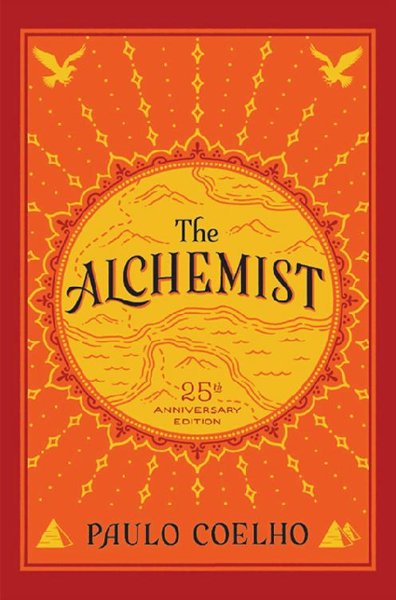
Paulo Coelho’s The Alchemist, first published in Portuguese in 1988, is a short fable that follows Santiago, a young shepherd from Andalusia, across the desert in search of a treasure he has dreamed of twice. It suits a book club because it is only around two hundred pages and because readers split sharply: some find it wise and quotable, others find it preachy and too easy. That disagreement is what makes a good discussion.
Below are twenty questions: ten you can use before everyone has finished the book, and ten that spoil the ending. A short section collects the six lessons our review pulled from the book, plus the one idea we think it gets wrong. It scores three and a half out of five in our review.
Spoiler-Free Questions
- Santiago dreams twice of a hidden treasure near the Pyramids of Egypt, and a fortune teller says the dream is real. Would you sell your sheep on that evidence?
- The old king Melchizedek says people usually know their Personal Legend when they are young and then give it up because it seems impossible. What did you want before you were told what was realistic?
- In Tangier a thief takes all of Santiago’s money. Why does the book start him so low?
- The crystal merchant dreams of a pilgrimage to Mecca but is too afraid to go. Did you see him as a warning or as someone who made a reasonable choice?
- Santiago stays almost a year with the crystal merchant, improving the shop. Our review calls this the most grounded part of the book. Do you agree?
- An Englishman on the caravan is studying alchemy and looking for an alchemist. What does his bookish approach contrast with in Santiago’s?
- At the oasis of Al Fayoum, Fatima tells Santiago that if he truly loves her he must follow his dream. Is that a beautiful idea, or does it ask the woman to do most of the waiting?
- The alchemist teaches Santiago to listen to his heart, read omens and understand the Soul of the World. Which of those do you take as magic and which as common sense?
- Our review says the book can be preachy and that characters arrive at the right moment with the right advice. Did the speeches feel like wisdom or slogans on a poster?
- The women in the book are warm but thin, and the alchemist is more a symbol than a person. Does that matter in a fable?
Spoiler Questions (Finish The Book First)
- The alchemist tells the tribal chief that Santiago can turn himself into the wind. Santiago speaks to the desert, the wind, the sun and the Hand that wrote all things. Did you believe the sandstorm?
- Santiago weeps at the Pyramids and a scarab crawls over the spot, and he digs all night and finds nothing. How did you feel in that moment?
- Refugees from tribal wars beat him and take his gold. Why does the book let the treasure hunter be robbed at the finish line?
- One of them mentions a recurring dream about a church with a sycamore growing from its sacristy, and Santiago laughs because he knows exactly where that is. Did you see the twist coming?
- The treasure is a chest of Spanish gold coins, precious stones and gold masks, buried where Santiago started. If the alchemist had simply told him, he would never have seen the Pyramids. Is the journey the point, or is the book having it both ways?
- The sycamore was always there, but he had to cross the desert to be able to dig. What does that say about the distance between you and your dream?
- The wind carries Fatima’s kiss and her scent, and Santiago whispers that he is coming. Does he get both the treasure and the girl too easily?
- Our review notes that the cost of the journey is easy to forget because the treasure arrives so smoothly. Would a more costly ending have been better?
- Santiago plans to give a tenth of the gold to the fortune teller, as promised. What does it say that he keeps that promise?
- Would you have gone, or stayed?
Six Lessons From The Book
Our lessons page names six ideas worth keeping. Know your Personal Legend. Listen to your heart. Read the omens. Treat fear as the real obstacle, since the book says the fear of suffering is worse than the suffering itself. Do not let love hold you back from your path. And remember that the journey matters as much as the destination. The idea we would push back on is that if you really want something, the universe will help, because it hides money, luck, family duties and plain hard work. Ask your group which of these they would keep and which they would argue with.
What To Read Next
Our review gives the spoiler-free verdict, and the ending explained page covers the sycamore twist after your group has finished. Our books-like-it list points to more fables and quest stories, and the review suggests The Little Prince, Siddhartha and Life of Pi.