The Short Version
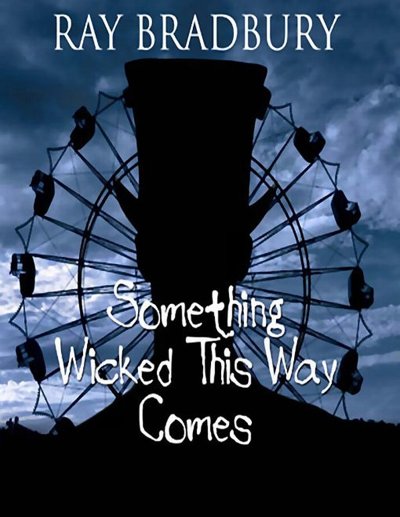
Ray Bradbury’s Something Wicked This Way Comes, first published in 1962, suits a book club because it is both a spooky autumn story and a quiet story about a tired father and his son. A carnival arrives in Green Town in late October, long after every normal carnival has gone home, and it offers people what they secretly wish for. The book is very good at showing what each wish costs.
Below are twenty questions: ten you can use before everyone has finished the book, and ten that spoil the ending. A short section on the 1983 Disney film gives the group a comparison to argue about. The book scores four and a half out of five in our review, with top marks for atmosphere, prose and ending.
Before You Start: Content Notes For Your Group
This is gentler than modern horror, but it is not mild. There is peril to children, some very scary moments, body horror, and a lot of talk about death and aging. It also uses some old fashioned terms for carnival performers that would not be used today. We suggest it for teens and up.
Spoiler-Free Questions
- The two boys, Will Halloway and Jim Nightshade, were born a minute apart on either side of midnight on October thirtieth, so Jim is a Halloween baby and Will is not. How does that small difference shape them?
- Will is careful and kind, and Jim is hungry for everything and in a hurry to be older. Which boy did you side with?
- The carnival, Cooger and Dark’s Pandemonium Shadow Show, arrives on a train nobody heard, and the calliope plays with no one at the keyboard. What did this opening do for your sense of dread?
- The handbill promises a thousand and one wonders, including the Dust Witch, the Mirror Maze and the Illustrated Man. Which attraction would you have been tempted by?
- Mr. Dark never shouts. He gives out calling cards that change color in your hand and is always polite. Why is a friendly villain more frightening?
- Charles Halloway is fifty four, the janitor at the town library, and believes he failed as a father because he is too tired and too slow. Did you share his view of himself?
- On a porch step at night, Will asks his father whether he is a good person, and then why he is not happy. Why does that conversation carry so much weight?
- The carnival feeds on regret, fear and wanting. What would it offer you?
- Bradbury writes in a rush of images, and almost every paragraph has a metaphor. Did the prose pull you in or wear you out?
- Our review says the middle sags into a long stretch of running, hiding and talking. Did you feel the pacing drop?
Spoiler Questions (Finish The Book First)
- In the bullet trick, Charles volunteers, calls for his son, and swaps the bullet for a wax one carved with a mark he decides is a smile. The Dust Witch falls dead with no wound. What does it mean that a smile kills her?
- In the Mirror Maze, Charles sees a million older, sicker versions of himself, and despair is the weapon. Why is the carnival strongest when it uses the victim instead of a monster?
- Will tells his father he does not care how old he gets and that he loves him, and Charles laughs and the mirrors fall. Why is laughter the answer?
- The frightened nine year old boy is really Mr. Dark, who has used the carousel to make himself a child. How did Charles know, and what did you make of how he defeats him by holding him kindly?
- When Mr. Dark dies, the tattoos fade and the people he collected, from the Skeleton to the Lightning Rod Salesman, run free. Why return the lightning rod salesman, the first person we met?
- Charles slaps Will, then plays a bad harmonica and makes him hop and sing until Jim sneezes and wakes. Why does laughter give life back?
- Will decides not to tell Jim he was dead. Was that right?
- On the carousel, Will wishes for three turns forward, Jim four, and Charles ten turns back. Why does Charles smash the machinery instead of riding once?
- Charles tells Will that people like Mr. Dark will come back in some other shape. Does that make the ending hopeful or ominous?
- Will says he never knew his dad, and now he does. Is the real ending the carnival’s defeat or the father and son at the railroad signal?
The 1983 Disney Film
According to several accounts, Bradbury pitched the idea in the 1950s to Gene Kelly as a treatment called Dark Carnival, and Kelly could not find the money. Bradbury turned it into the novel and dedicated it to Kelly. The 1983 film was directed by Jack Clayton, with Bradbury writing the screenplay. Jason Robards played Charles, Jonathan Pryce played Mr. Dark and Pam Grier played the Dust Witch. Reviewers say it is a smaller, simpler story than the book, with less of the tension between the two friends and little of the poetic language. Which would your group choose?
What To Read Next
If you want a spoiler-free recommendation first, start with our review. Use our ending explained page after the discussion to compare notes on the mirrors, the carousel and the smile. Our books-like-it list points to more atmospheric reads, and the review suggests Fahrenheit 451, The Martian Chronicles and The October Country by the same author.