The Verdict
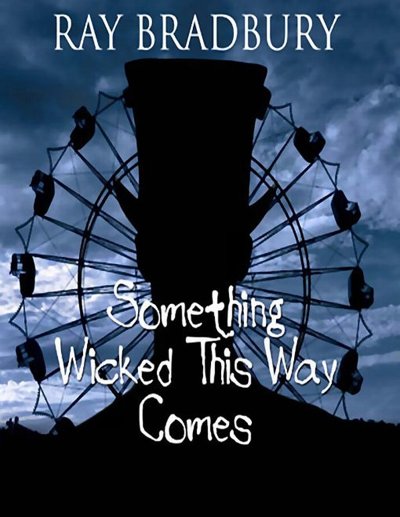
Today I’m giving you my honest take on Something Wicked This Way Comes, Ray Bradbury’s dark carnival novel.
Quick verdict. If you love autumn, old fashioned dread, and sentences that sound like poetry, this is one of the best October reads there is. If you want a fast, plotty thriller, it might test your patience. I give it four and a half out of five, and this whole review is spoiler free.
What It’s About
The book was first published in nineteen sixty two, and it is set in a small Illinois town called Green Town.
Two thirteen year old boys live next door to each other. William Halloway, called Will, has hair as blond as milk thistle. Jim Nightshade has dark, wild hair and a restless streak. They were born a minute apart, one just before midnight on October thirtieth, and one just after, so Jim is a Halloween baby and Will is not.
They are best friends, and the book opens in the last days of October, a month the narrator calls rare for boys. Then, one strange night, Halloween comes early.
A lightning rod salesman walks through town just ahead of a storm. And a few nights later, a train arrives that nobody heard on the tracks. It carries a carnival, Cooger and Dark’s Pandemonium Shadow Show, and it shows up in late October, long after every normal carnival has gone home.
Will and Jim go to see it. And that’s all I’ll say about the plot. This is a book where the less you know, the better it works.
The Carnival
Let me tell you why the carnival is so good, without spoiling a thing.
First, how it arrives. A handbill blows through town announcing a thousand and one wonders. The Dust Witch. The Mirror Maze. A man called the Illustrated Man, whose skin is covered with moving pictures. The boys read it with wide eyes, and the wind snatches it away before they can check anything.
Then comes the train. Its calliope plays music, but when the boys look up at the keyboard, nobody is sitting there. The wind in the pipes is making the song. It is only a few pages, and it is genuinely spooky.
And the mystery is the carnival itself. It does not feel like a monster you can shoot. It feels like a temptation. It offers people the thing they secretly wish for, and the book is very good at showing you what each wish costs.
What Works
Three things work beautifully for me.
First, the atmosphere. Bradbury makes October a place you can walk around in. Leaves smell like ancient dust. The sky goes orange and ash grey. The town clock hangs in the dark. I finished some chapters and honestly looked up to see if the weather had changed.
Second, the villain. Mr. Dark does not shout. He gives out calling cards that change color in your hand, he wears a suit that seems to itch and crawl, and he is always polite. That politeness is what makes him frightening. He is a salesman, and the book understands that the best temptation is a friendly one.
Third, the idea at the center. The carnival feeds on regret, fear and wanting. Everyone in town has something they secretly wish they could be, and the book asks, quietly, what you would give to get it. That question stayed with me for days.
Characters and Themes
Now let’s go a little deeper, because the heart of this book is not the carnival. It is a father and a son.
Will’s father is Charles Halloway. He is fifty four, and he works as the janitor at the town library. He thinks of himself as an old man, and he thinks he failed as a father because he is too tired and too slow to keep up with his boy.
There is a late night scene where Will asks his father if he is a good person, and then asks the question that hurts. Why aren’t you happy? That conversation, on a porch step, in the dark, is the emotional spine of the whole novel. Bradbury is saying that growing up means finding out your parents are afraid too.
Then there are the two boys. Will is careful and kind. Jim is hungry for everything and in a hurry to be older. They are a lovely portrait of a friendship where one friend wants to stay and one wants to run. And the book’s main theme is that fear of growing old, and the danger of wanting to skip ahead.
Writing and Pacing
Let’s talk about the prose, because you will either love it or bounce off it.
Bradbury writes in a rush of images. A kite is so wise it almost knows the wind. A train whistle holds the sound of a billion people who did not want to be dead. Almost every paragraph has a metaphor, and some have five.
I adore it. It reads like a long poem about autumn. But it is a lot. Some pages are so dense with similes that you stop and reread a line just to understand what happened.
And that affects pacing. The first third is slow and eerie, building dread. The middle speeds up into a long chase through town. Then the last stretch is a huge, loud, whirling climax. It is not a huge book, but the style makes it feel longer.
What Doesn’t Work
I did have some complaints. Let me give you four.
First, it can be overwritten. When every sentence reaches for a metaphor, the important plot beats sometimes get buried.
Second, there is a long stretch in the middle where characters mostly run, hide and talk. The dread is still there, but not much changes.
Third, the supporting adults in town are thin. Several of them exist mainly to be tempted, and we meet them so quickly that their stories feel like sketches.
Fourth, and this is personal, a few speeches explain the theme too directly. Bradbury sometimes stops to tell you what the story means, when the story was already showing you perfectly well.
Content Notes
A few quick heads ups. This is a classic horror fantasy, and it is gentler than modern horror, but it is not mild.
There is peril to children, and some very scary moments. There are body horror moments, and a lot of talk about death and aging. There are some old fashioned terms for carnival performers that would not be used today.
If you are reading it with a younger reader, I would suggest this is best for teens and up.
The Scorecard
Here is my scorecard, out of five.
Atmosphere, five out of five. Honestly one of the best in any novel I know.
Prose, five. It is a lot, but it is gorgeous.
Characters, four. The father and son are wonderful.
Pacing, three and a half. The middle sags.
Ending, five. It is earned, and it is not what you expect.
That averages out to four and a half out of five.
Who It’s For
Read it if you love autumn. Read it if you like classic horror that works on atmosphere instead of gore. Read it if you love books about friendship, fathers and growing up, or if you want a spooky story that is more feeling than gore.
Skip it, or at least be careful, if you want a fast, plotty thriller, or if dense, poetic prose wears you out.
If you like this, look out for Fahrenheit four fifty one and The Martian Chronicles by the same author, and The October Country, which is a short story collection that is perfect for this time of year.
Where To Get It
You can find links to the book and the audiobook in the description. The audiobook is a good way to experience all that language.
Tell me in the comments, what would the carnival offer you? And if you want to know how it ends, my ending explained video is next. Thanks for watching, and I’ll see you in the next one.