What Parents Want to Know
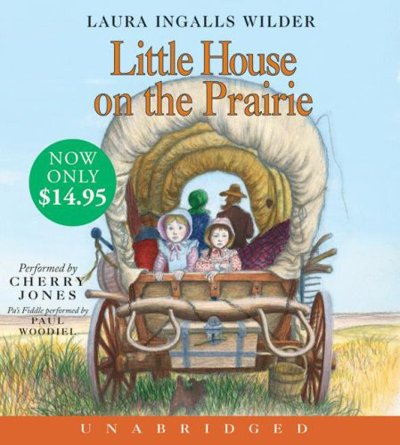
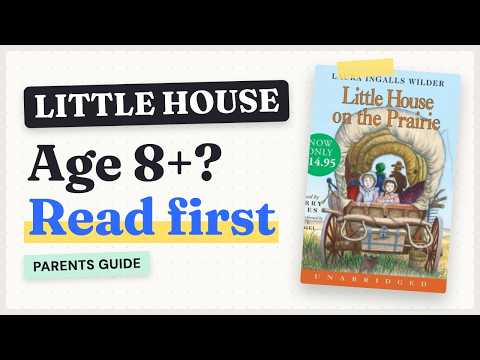
I read all twenty-six chapters of Little House on the Prairie, so every note here has a chapter number.
The short version is that it’s a warm family story with a real problem in it. The problem is how it portrays Native Americans. I’ll cover age fit first, then the scary parts, then that problem in full.
Age Fit
The jacket on my copy says ages eight to twelve, and I think that’s about right for reading alone. The sentences are short and clear, and the chapters run about thirteen hundred to twenty-nine hundred words, so it works for a read aloud at bedtime, with a younger child, if you’re sitting beside them.
Laura and Mary are small girls, and the book keeps to their eye level. Nothing romantic happens, and swearing is mild. The strongest words are durned, blasted and, once, hell bent for leather, in chapter twenty-three.
Scary Moments
Here is the peril. In chapter one the family drives across a huge frozen lake, and that night they hear the ice cracking. In chapter two the wagon is swept across a flooded creek and Jack is lost for a while. In chapters three and seven, wolves: eyes in the dark, then Pa surrounded by a pack.
In chapter twelve a man collapses at the bottom of a well and Pa goes down to save him. In chapter fifteen the whole family is sick with fever, and the girls are feverish and confused. In chapters sixteen and twenty-two, a chimney fire and a prairie fire. Chapter twenty has a panther.
Most of this ends well, and Ma and Pa stay calm. But chapters fifteen and twenty-two are the ones I’d preview for a sensitive child.
Violence and Animals
The violence is mostly hunting. Pa shoots rabbits and prairie hens, and in chapter eleven the book notes that the rabbit was shot through the eye. He skins a rabbit in front of the girls.
Pa raises a gun at Jack in chapter three, thinking he is a wolf, and Pa strikes his dog for the first time in chapter twenty-four. Mrs. Scott starts to talk about a massacre in chapter seventeen, but Ma stops her before any details.
Adults smoke and chew tobacco. Pa smokes a pipe, and Mr. Edwards spits tobacco juice. Saloons are mentioned once, in chapter nineteen.
How the Book Portrays Native Americans
This is the section that matters. The words Indian and Indians appear about two hundred thirty-five times in the book, and four chapters carry most of them: eleven, eighteen, twenty-three and twenty-four.
The portrayal is mixed. Laura is curious and drawn to them. She wants to see a papoose, she is thrilled by the ponies, and she wishes she could be a little Indian girl, in chapter twenty-four. Pa tries for respect, saying in chapter eleven that the family shouldn’t make enemies, and he salutes the Osage leader in chapter twenty-four.
But the book also calls two Native men wild, naked, fierce, and says their eyes are like a snake’s, in chapter eleven. It uses the word savage and the word papoose. It describes the war cries as a nightmare, and it treats the Native camps as a threat the family must wait out.
What Characters Say
Ma says, in chapter four, that she just doesn’t like Indians, and gives no reason. In chapter seventeen Mrs. Scott says the only good Indian is a dead Indian, and in chapter twenty-two Mr. Scott says it too. Pa says he doesn’t know about that.
The book answers it once. In chapter twenty-three Pa says of the Osage leader who stopped the attack, that’s one good Indian. That line corrects Mr. Scott, but to me it also keeps the idea that Indians are judged as good or bad.
The Land
Look at chapter eighteen. Laura asks why the Indians have to go west. Pa answers that the government makes them, and that white settlers get the best land because they got there first. Then Laura asks if that will make the Indians mad, and Pa says no more questions.
That exchange shows how the book handles it. And the first chapter says there were no settlers in the West, only Indians. Reportedly, the original line said no people, and the publisher changed the word in nineteen fifty-three.
In June of twenty eighteen, as reported, the Association for Library Service to Children dropped Wilder’s name from a major children’s literature award, citing her stereotypical attitudes, and renamed it the Children’s Literature Legacy Award.
Manners and Gender Roles
The book is of its time. Children must be seen and not heard, in chapters five and nine. Yelling is not ladylike, in chapter thirteen. Ma keeps the house and Pa does the building, hunting and trading, though in chapter five Ma helps raise the logs.
A bigger thing, for many families, is that nobody questions any of it. Laura gets scolded for asking questions at the table, and for asking about the Indians.
What’s Good in It
It’s not all hard. The family is loving and funny. Pa sings, plays the fiddle and calls the girls pet names. Neighbors help each other, in chapters five, twelve and fifteen. Ma says in chapter fifteen that she cannot thank Mrs. Scott enough, and Mrs. Scott says that’s what neighbors are for.
Chapter nineteen’s Christmas, with Mr. Edwards, a cup, a stick of candy and a penny for each girl, is one of the sweetest scenes I’ve read.
One More Note
Chapter fifteen describes Doctor Tan, the Black doctor who saves the family. The book says Laura had never seen a Black man before, and describes him mostly by his skin color. He is kind, and Laura likes him, but the description is worth a conversation.
How to Read It With Kids
My suggestion, as opinion, is to read it together and stop at chapters eleven, eighteen, twenty-three and twenty-four. Ask who is telling this story, and who isn’t being heard.
You can also ask why the family leaves, and who the land belonged to. The book calls it Indian country but never says whose land it is. Reportedly the real family was on land that belonged to the Osage.
If you want a Native perspective alongside it, look for books by Native authors, and ask your librarian.
The Verdict
So, is Little House on the Prairie okay for kids? I’d say yes, for ages eight and up, if an adult is in the conversation. Skip it, or wait, if you can’t have that conversation.
Do you read it to your kids? Tell me in the comments. My book versus show video covers what the TV versions do differently, and thanks for watching.