The Short Version
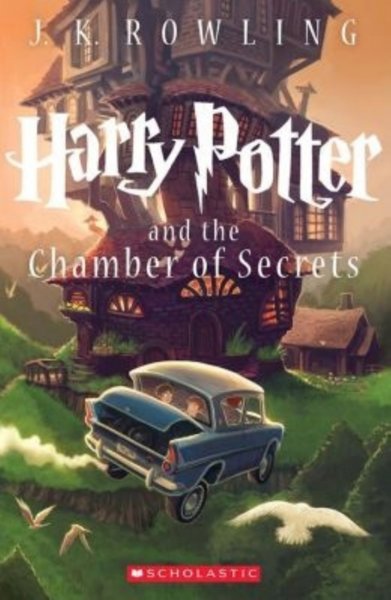
Harry Potter and the Chamber of Secrets, book two of seven in J.K. Rowling’s series, works well for a book club because it is a real whodunit with fair clues, plus a comic gift in Gilderoy Lockhart and a heartbreaking one in Dobby. Published in the UK in 1998 and in the US in 1999, it runs eighteen chapters and roughly eighty-five thousand words. The question driving it is simple: who is behind the attacks, and what is the thing nobody can see?
Below are twenty questions: ten you can use before everyone has finished the book, and ten that spoil the ending. A short section on the 2002 film gives the group something to compare. The book scores four and a half out of five in our review.
Before You Start: Content Notes For Your Group
This book is gentler than the later ones but darker than the first. There are frightening moments, with students found frozen and rigid, talk of death in the school’s past, snakes and giant spiders, bullying and a house elf who is treated cruelly. The villains use a slur for wizards born to Muggle parents, and the book clearly frames it as ugly. Our review suggests readers around nine and up, or younger with a grown-up beside them.
Spoiler-Free Questions
- Dobby appears in Harry’s bedroom with an urgent warning not to go back to Hogwarts. Why do you think he cannot just say what he knows?
- Dobby punishes himself whenever he says too much, and he keeps making things worse while trying to help. Is he funny, heartbreaking or both?
- Gilderoy Lockhart is a dazzling celebrity author with titles like Gadding with Ghouls and an unshakable belief that he is a hero. Why is he such an effective comic character?
- The Weasley home, the Burrow, is crooked and crowded, and Mr. Weasley is delighted by telephones and Muggle money. What does it add to the wizarding world?
- Harry hears a cold voice that nobody else can hear. How does it change the feel of the castle, which is dangerous for the first time and not just magical?
- For much of the year people Harry trusts start to look at him differently. What does the book say about being stared at when you did nothing wrong?
- The villain’s whole cause is about who counts as a real wizard. How does the book treat prejudice, and does it stay in the background or take center stage?
- Which suspect did you believe for the longest, and when did you start to doubt?
- Our review notes that adults may guess the answer early and that Hermione is sidelined for long stretches. Did that matter to you?
- The review calls the plotting tidy, with jokes that turn into clues later. Which small scene felt like a throwaway and may turn out to matter?
Spoiler Questions (Finish The Book First)
- Hermione holds a torn library page with one word, pipes, describing a basilisk that kills with its stare. Why did no one die, and how do Colin, Justin, Mrs. Norris and Hermione each survive?
- Lockhart has been taking credit for real heroes’ adventures and wiping their memories. Did you suspect him, and was his comeuppance deserved?
- The real villain is a sixteen-year-old memory of Tom Riddle, kept in a diary for fifty years, and the girl opening the Chamber is Ginny Weasley. How does the book handle her guilt?
- Ginny confided in a diary because it listened. What is the book warning children about trusting what seems kind?
- Riddle rearranges the letters of Tom Marvolo Riddle into I am Lord Voldemort. Was it a satisfying reveal?
- Harry fights the basilisk with help from Fawkes, the Sorting Hat and a silver sword. Does Harry win alone, or is the victory shared?
- Harry fears he is like Riddle, and Dumbledore says it is our choices that show who we are. Does the book convince you?
- Harry hides the ruined diary in a dirty sock, Lucius Malfoy throws it away and Dobby catches it, freeing himself. Why is this such a joyful payoff?
- Hagrid was blamed fifty years ago, and Lucius is sacked as a governor. Does justice in this book feel complete?
- The book ends with a feast in pajamas and Ginny’s note about Percy’s secret girlfriend. Why end a dark book so gently?
Book And Film
Your group may want to compare the 2002 film, directed by Chris Columbus and running 161 minutes, with Kenneth Branagh as Lockhart, Jason Isaacs as Lucius Malfoy and Toby Jones voicing Dobby. It was Richard Harris’s final film as Dumbledore. The film cuts Nearly Headless Nick’s deathday party, Peeves and Professor Binns, and trims the Ginny clues and Percy’s subplot. It also changes where Lucius slips the diary into Ginny’s cauldron, where Harry can see it, whereas in the book he picks up her old Transfiguration book.
What To Read Next
If your group wants a spoiler-free verdict first, start with our review. Our ending explained covers every reveal, and our clues page shows what was hiding in plain sight, so save both for after the discussion. The book versus movie comparison is a good follow-up if you plan a film night.