The Short Version
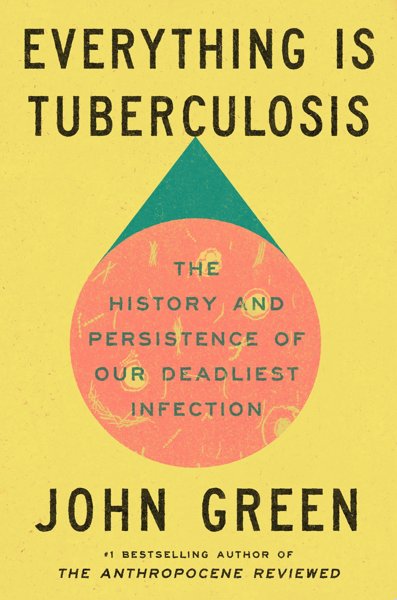
Everything Is Tuberculosis, John Green’s nonfiction book from Crash Course Books (March 2025), works well for a book club because it asks a question every reader can argue about: how can a disease we can cure still kill more than a million people a year? It opens in Lakka, a crumbling hospital in Sierra Leone, where Green meets a teenager named Henry, and widens into a history of poets, doctors, drug prices and stigma.
It is short, about two hundred pages with an introduction and twenty-three chapters, and it mixes history, science, reporting and memoir. Below are fourteen questions to discuss, followed by a section on applying the book’s ideas. Our review scores it four out of five.
Before You Start: Content Notes For Your Group
Tell your group first. The book describes the death of children, graphic coughing of blood and wasting, slavery and colonial violence, racist medical claims quoted from the past, civil war, hunger and the Ebola outbreak in Sierra Leone. It is not gory for its own sake, but if child illness is a hard line for someone in your club, say so before you pick it.
Discussion Questions
- Green is a novelist, not a doctor or a historian, and he says so. Does that honesty make the book more trustworthy, or would you have preferred an expert as the guide?
- Henry looks about nine but is seventeen, because hunger and tuberculosis stunted his body. Why do you think Green makes us care about one person before he gives us the numbers?
- Henry writes poems and cheers up other patients while his own medicine is failing, and his mother, Isatu, never leaves his side. What did these details add that statistics could not?
- Henry describes hunger as the worst part of treatment, and food and medicine return again and again. Why might that be such a quiet but strong argument?
- Green argues that for centuries we blamed the sick, then romanticized them, and today we stigmatize poor patients who supposedly fail to comply. Where do you see those patterns in how people talk about illness now?
- Poets and patients once believed that wasting away made you more creative. Why would people cling to a flattering story about a deadly disease?
- The history is full of surprises: tuberculosis helped create the cowboy hat, and half of the assassins in Sarajevo were sick with it. Which story stayed with you, and did it work as more than trivia?
- Robert Koch announced a cure that did not work, and Arthur Conan Doyle went to Berlin and quietly saw through it. What does that episode say about hope and hype in medicine?
- The book notes forty-six years with no new tuberculosis drug at all. Why do you think that happened, and who does Green hold responsible?
- Green names prices: a test cartridge that cost under five dollars to make sold for almost ten, and a lifesaving drug sat behind a patent wall. Is specific anger more persuasive to you than general outrage?
- In Peru, with food and support for patients, over eighty-five percent of drug-resistant cases were cured, and treatment later fell from about fifteen thousand dollars to a few hundred. What does that program prove, and what does it leave unanswered?
- DOTS, the standard way of delivering drugs, saved millions of lives and still treated patients like suspects. Is directly watching people swallow pills care, distrust or both?
- Green’s final answer is that the real cause of tuberculosis today is us, which our review calls emotionally true and practically vague. Did that ending satisfy you?
- Our review scores pacing and balance at three and a half each, noting repetition and few voices from drug companies or health ministries. Whose perspective would you have added?
Applying It: Beyond The Book
Use these prompts to carry the discussion past the last page.
- Green’s plan to search, treat and prevent carries a price tag of about twenty-five billion dollars a year. Would your group call that large or small, and what would it take politically to reach it?
- The cure, a doctor tells Green, is where the disease is not. What does that sentence mean for how you think about health in your own community?
- Pick one idea from the book, such as stigma, the cost of drugs or the role of hunger. What is one concrete thing a reader could do about it?
- The title says everything is tuberculosis, which Green admits is a joke and warns that any single lens distorts history. Where does the lens help, and where does it overreach?
Checking The Numbers
Your group may want to verify the figures. In our review, the World Health Organization’s 2025 report estimates that 10.7 million people fell ill in 2024 and about 1.23 million died, down slightly from the 1.25 million Green uses for 2023. WHO also says roughly a quarter of humanity carries the bacteria, matching the book, and its fact sheet says only about two in five people with drug-resistant tuberculosis got treatment. Treat any figure as a snapshot, since the numbers move every year.
What To Read Next
If you want a verdict before you commit, start with our spoiler-free review, which checks the book’s key numbers and lays out the fairest criticisms. For similar books, our review points to Mountains Beyond Mountains by Tracy Kidder, Illness as Metaphor by Susan Sontag and Phantom Plague by Vidya Krishnan.